
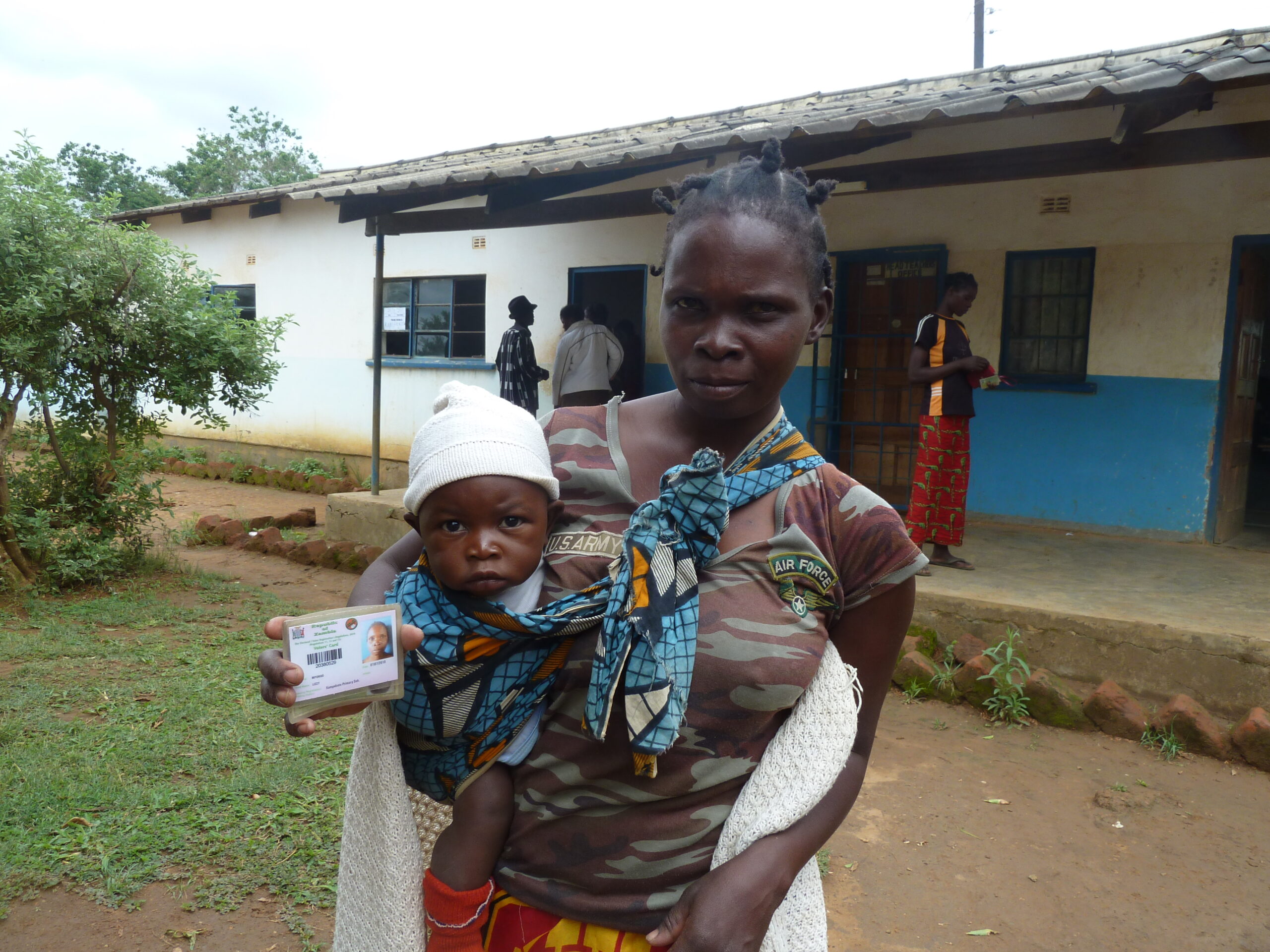
Attribution: A woman shows her voting card during Zambias 2011 elections. Photo: Louise Mellor/DFID. Source: Wikimedia Commons. Licence: CC BY-SA 2.0
.jpg)
Democratic Governance Check: 2026 General Elections
Following a decade marked by the authoritarian tendencies of Edgar Lungu’s government, Hakainde Hichilema’s victory in August 2021 was hailed as a democratic revival and an affirmation of Zambia’s ability to correct its course through peaceful means. Unfortunately, despite the current government coming to power promising a break with the authoritarian practices of the past, concerns have arisen over the government’s constitutional reforms, restrictions on opposition activities, selective law enforcement, and adoption of broad surveillance powers.
Zambia faces a decisive test as she prepares for the general election on 12 August; doubts are emerging about whether 2021 represented a true democratic opening or whether it was merely a circumstantial episode shaped by the previous government’s decline. Genuine democracy is not defined solely by voting, but by impartial institutions, the right of citizens to express themselves without fear, and a level playing field for all political actors. In Zambia’s case, these principles are under increasing pressure.
The first cause for concern is the institutional framework. The constitutional reforms passed in 2025, which significantly increase the size of parliament, have been justified as a measure to improve representation; however, the lack of transparency in the redrawing of electoral constituencies has raised suspicions. Without access to the technical report underpinning these changes, it is difficult to determine whether the redrawing disproportionately favours the ruling party.
The erosion of civic space is another cause for concern. The restrictive application of the Public Order Act, a law requiring prior notification to the police of any intention to organise public meetings or demonstrations, allows the police to authorise or refuse such events, limiting the opposition’s ability to organise events and mobilise its supporters. There have also been reports of arrests of journalists and obstacles to the work of the media, and the main opposition party, the Patriotic Front, goes into the elections under legal pressure for criticising the president.
Furthermore, despite the repeal of the offence of defamation of the president in 2022, opponents and critics of the government continue to face legal proceedings for alleged insults against the president. Even more alarming is the passing of cybersecurity laws that allow for the surveillance of communications without proper safeguards. In an electoral context, such measures can have a chilling effect on freedom of expression, particularly in a country where political debate is already showing signs of polarisation.
Despite these concerns, it would be a mistake to paint an entirely negative picture. Zambia still has key institutions that function reasonably well.
The Electoral Commission maintains a reputation for technical competence, and the country has a strong track record of peaceful transfers of power. Furthermore, the acceptance of international observers suggests that the government still seeks external legitimacy and recognizes the importance of certain democratic standards. However, the central question is not whether elections will be held, but under what conditions. A level playing field, freedom of expression, institutional transparency and effective political competition are essential elements that cannot be taken for granted.
Zambia’s democratic fragility is inseparable from its economy. Zambia continues to rely heavily on copper exports, making it vulnerable to international fluctuations. Although the government has made significant progress in restructuring its external debt, many citizens have not seen any tangible improvements in their daily lives. Debt, inflation and youth unemployment have fuelled social frustrations which threaten to intensify ethnic and regional divisions, increasing the risk of political conflict.
In this scenario, the role of the international community will be crucial, but not sufficient. The presence of observer missions can contribute to transparency, but it does not replace the need for internal reforms. The publication of the electoral boundary report, ensuring participation for all parties, the review of restrictive laws and the protection of civic space are necessary steps if the process is to be credible. The international community also faces a delicate challenge. The presence of election observers can help to reduce irregularities and increase transparency, but there is also a risk that administratively well-organised elections may be granted international legitimacy despite taking place in a politically unequal environment.
Zambia has the ingredients to consolidate a robust democracy: relatively functional institutions, an active civil society and a tradition of peaceful alternation of power, but it also faces clear risks of regression, especially if those in power continue to use the state apparatus to consolidate their position. The 2026 elections will be a decisive test of whether the democratic opening of 2021 was the start of a lasting transformation or simply a momentary change in government. The difference between these two outcomes will depend not only on the result at the ballot box, but also on the integrity of the process leading up to it.