

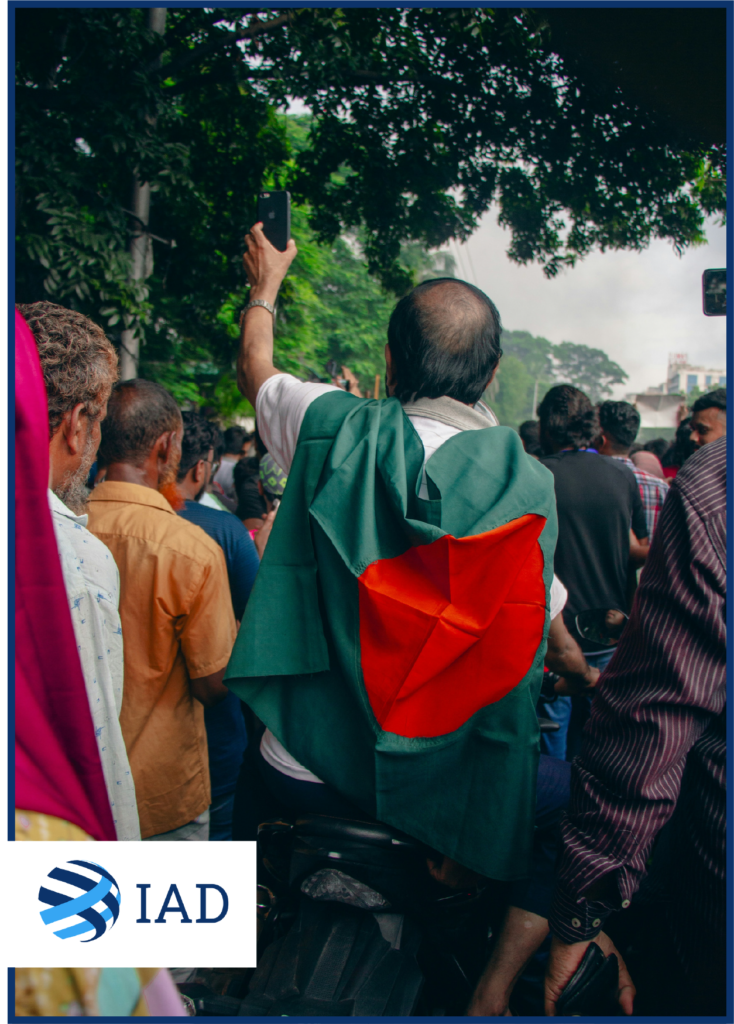
On 5 August 2024, Bangladesh entered a constitutional crisis after a mass uprising—initially led by students and later joined by the wider public—forced Prime Minister Sheikh Hasina from power. The interim government that followed has struggled to establish its constitutional legitimacy, raising serious concerns about governance and the credibility of the planned 2026 elections.
The brief highlights key democratic risks and recommends urgent action, including deploying UN election observers, lifting the ban on the Awami League, ending political party bans, and introducing stronger oversight and regulation of security forces. It also calls for independent investigations into violence by the Rapid Action Battalion (RAB), comprehensive and impartial inquiries into human rights abuses (past and present), and prosecutions for all responsible parties.
The crisis reflects Bangladesh’s long history of political instability. Since independence in 1971, the country has alternated between democratic governance and authoritarian tendencies, with repeated challenges to constitutional rule and democratic institutions.
Bangladesh’s democratic future will be shaped by what happens next. Without transparent oversight, independent investigations, and inclusive political participation, the 2026 elections risk compounding the current crisis