


At the Munich Security Conference earlier this month, US Secretary of State Marco Rubio delivered an address that emphasised the shared democratic and civilisational bonds that unite America with its European allies. Sighs of relief were in order for many in attendance, with Conference Chair Wolfgang Ischinger describing the speech as “reassuring”. It is abundantly clear, however, that after recent clashes over Greenland, much reassurance will be needed on the part of the United States if the transatlantic alliance is to be salvaged.
While Trump’s initial designs on Greenland during his first term were dismissed as “hopefully a joke”, it has become apparent that this was far from the case, with the President repeatedly asserting that control was necessary for national security reasons. Things reached fever pitch earlier this year, with the president causing deep distress and consternation in Europe after threatening the use of military force.
There is no question that Greenland is crucial for US security in the Arctic, particularly given the growing influence of Russia and China in the region. Greenland sits directly on the shortest flight path for intercontinental ballistic missiles travelling from Russia or the Middle East to the United States, and it is a key part of the GIUK Gap (Greenland-Iceland-United Kingdom), an anti-submarine warfare chokepoint during the Cold War, which today remains important for monitoring and potentially restricting Russian naval movements. It is critical for US security therefore, that the United States is able to properly monitor and restrict adversarial naval movements with its allies in the Arctic Ocean.
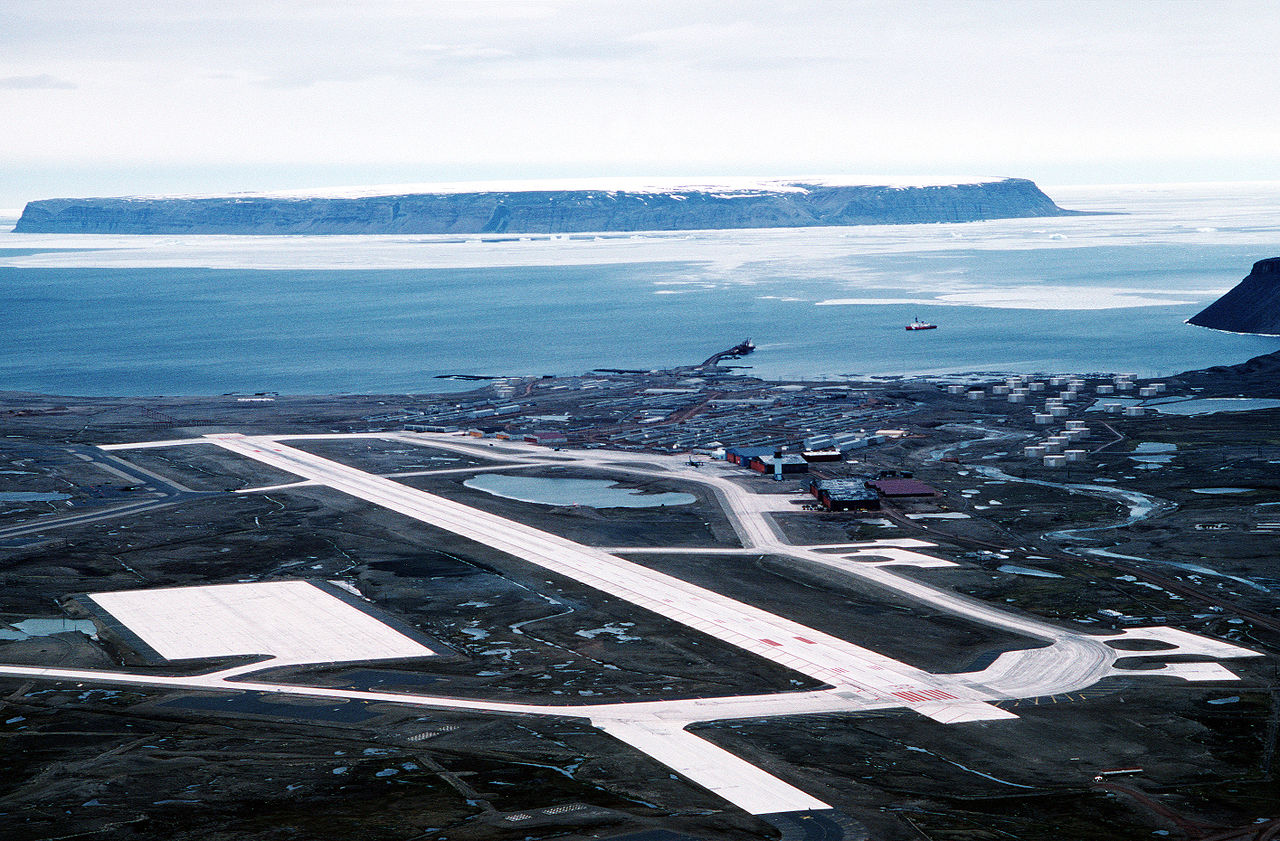
These efforts are already possible, however, due to the US military presence already on Greenland’s soil. The Pituffik Space Base, operated by the US Space Force, hosts “an upgraded early warning radar weapon system that can detect ballistic missiles” and semi-regular NORAD deployments, with exercises taking place alongside the Royal Danish Air Force as recently as October. Existing agreements with Denmark also allow the US to bring as many troops as it wants to Greenland. It is also the case that other than Russia, all of the world’s other Arctic states (Canada, Denmark, Finland, Iceland, Norway, Sweden, and the United States) are NATO members and share virtually identical security interests with the United States on these questions.
Another explanation for US interest would be Greenland’s wealth of untapped rare earth minerals. China currently accounts for approximately 70% of global rare earth element mining output, 90% of refining, and over 90% of magnet production, leaving the US heavily reliant on Chinese exports for its defence. Access to Greenland’s supplies would ease US reliance on China for these resources; however, forced annexation for access is not only immoral but completely unnecessary. As Greenland’s business and mineral resources minister Naaja Nathanielsen explained last year, the US and Europe are its preferred partners for exploiting these resources, with Chinese investments having been rejected in the past due to US security concerns.
Even if one leaves aside the fact that Greenlanders overwhelmingly have no interest in becoming part of the United States, these repeated threats of territorial annexation don’t seem to have any genuine basis in America’s strategic interest. They have also left an already rattled Europe deeply wary of future partnership with the United States. Trump’s pullback of support for Ukraine (even suspending it entirely at points), his contentious relationship with Zelenskyy, and seeming sympathy with Putin have already left the transatlantic alliance deeply strained. Should Trump follow through on his threat to use military force, Europe’s strategic realignment would be guaranteed, and the emergence of Europe as an adversarial block would become a very real possibility.
America is, of course, not without its own frustrations with its European partners. The increasing censoriousness of European governments, divisions between US and European approaches to China and the comparative lack of military funding of other NATO members (although it is worth mentioning that Denmark matches the US in percentage of GDP defence spending) have left many Americans bristling at their European partners. Washington should remember, however, that the only use of Article 5 was in response to the attacks on September 11th. When America was attacked, NATO answered the call, and European soldiers, many of them Danish, fought and bled alongside them. If the United States no longer feels that NATO membership is the proper path for maintaining its security, then it has every right to withdraw and pursue its own path, but to engage in military aggression against its allies that have fought for American security so recently would be nothing short of betrayal.
American partnership in harvesting and utilising rare earths in Greenland has already been welcomed. The US has the full cooperation of every Arctic state on the planet, minus Russia, on security issues, thanks to shared NATO membership. How much easier for America to deter Russian naval activity in the region with the combined strength of those Arctic allies than by going it alone? Instead, we now encounter a situation where EU commissioners have discussed potential support for Denmark against the United States, including troops and military infrastructure such as warships and anti-drone capabilities. Ironically, it now seems the threat of American military force may prompt Europe to finally engage in the military buildup Washington has been hoping for, as a deterrent to America rather than for support.
With a resurgent Russia and its increasingly vulnerable position in Asia, America’s need to maintain its alliances is more crucial than ever. The threat of aggression against Greenland threatens to completely unravel the Trans-Atlantic alliance, an unravelling which would not only be a catastrophe for security on both sides of the ocean, but for the increasingly beleaguered international order both sides have worked to uphold over the last century.While Secretary Rubio’s words in Munich set a welcome tone, concerns over Europe’s future with the United States remain, and it is abundantly clear that much damage control will be needed if the alliance is to be restored. The Europeans, for their part, have made it clear at this conference that they intend to increase their own military expenditure in response to concerns over the reliability of the US. This buildup is a welcome development, even as it comes as a result of the most unwelcome of tensions with America. It now falls to America to ensure that Europe, and indeed the rest of its allies, know it as a friend, not simply another threat.
Press Contact
Charles Cooper,
Co-Director of the International Association for Democracy (IAD)
Mail: info@iad.ngo